The workshop focused heavily on how partnerships between academia and municipalities can enhance
governance capacity, improve risk assessment and enable adaptive, forward-looking urban planning.
Central to the discussion was the role of science as a support system for local public administrations,
specifically through the delivery of scientifically robust, impact-based decision support services.
The event opened with a policy-oriented segment titled “Insights, Improvements, Actions,” featuring
Raul Pop (Secretary of State, Ministry of Environment, Waters and Forests) and Bogdan Sabo (General
Counsel, Bucharest Municipality). This segment highlighted the critical political and operational
commitments required to embed climate adaptation directly into local governance frameworks and
urban planning
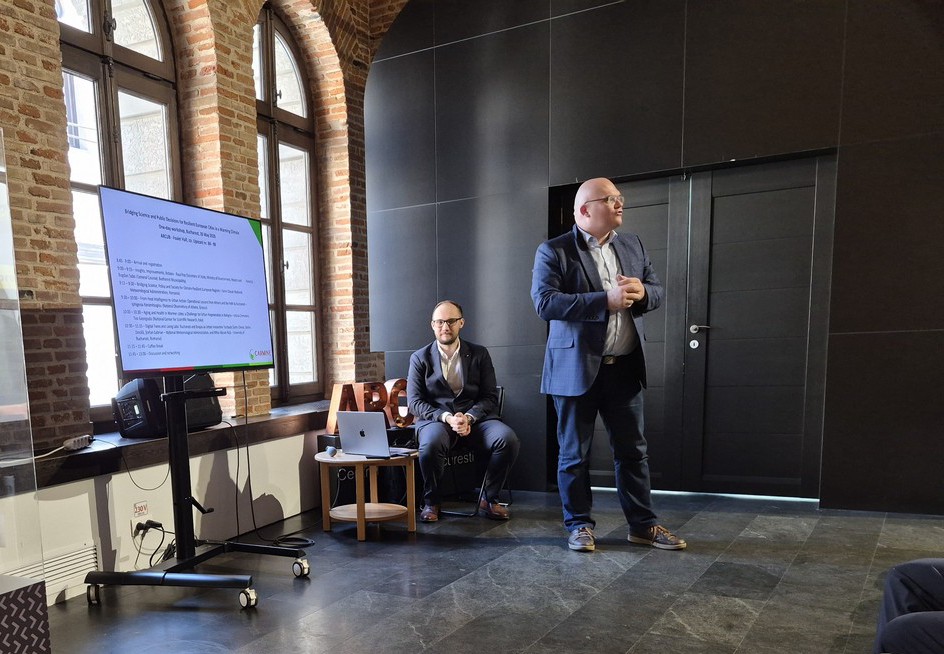
Raul Pop (Secretary of State, Ministry of Environment, Waters and Forests)
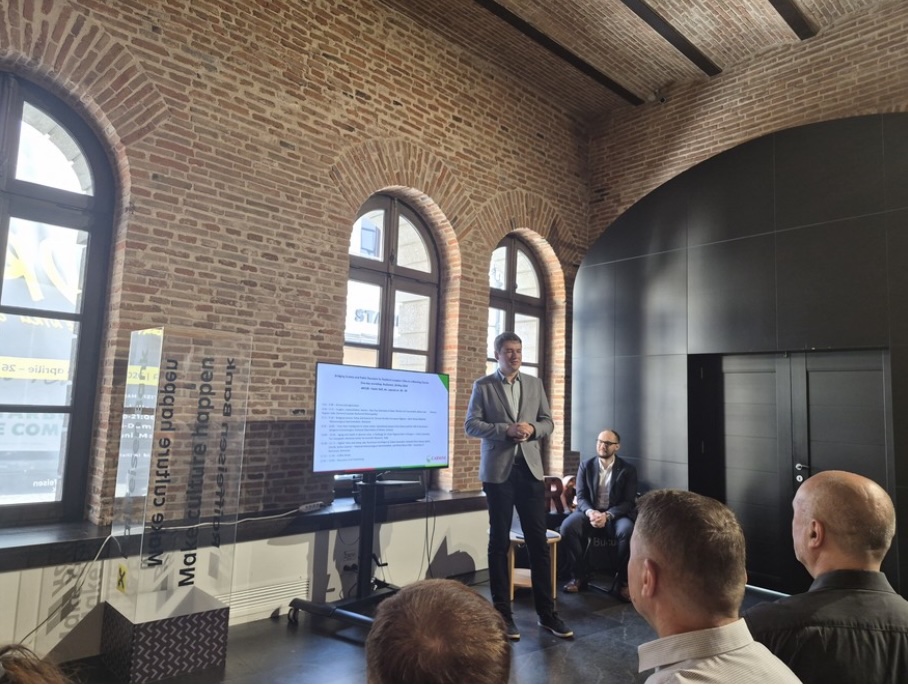
Bogdan Sabo (General Counsel, Bucharest Municipality)
Following this, Sorin Cheval (ANM) presented “Bridging Science, Policy and Society for Climate-
Resilient European Regions,” exploring structural pathways to transform raw climate data into
actionable policy insights. His discussion emphasised how successful regional adaptation depends
on continuous, multi-directional dialogue among scientists, regional policymakers and civil society.
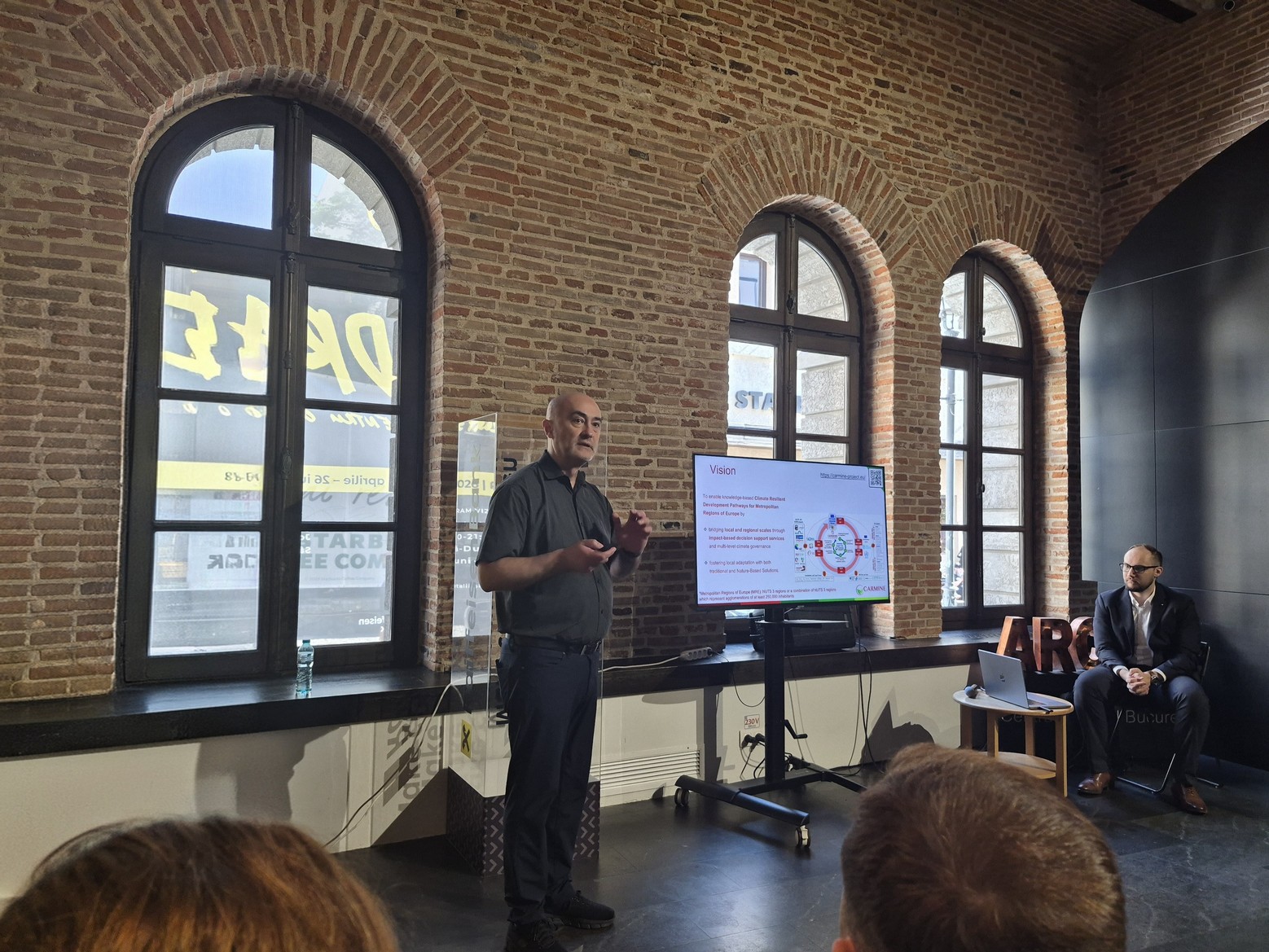
Sorin Cheval (ANM)
Iphigenia Keramitsoglou (National Observatory of Athens) presented “From Heat Intelligence to
Urban Action: Operational Lessons from Athens and the Path to Bucharest,” focusing on the
Extrema Global mobile application. This digital tool allows users to plan daily tasks around
temperature forecasts, routing them through existing cooling infrastructure and directing them to
shaded pathways, green spaces or cooling centers. Furthermore, it creates a two-way feedback loop,
allowing the public to rate their experiences and provide infrastructure feedback directly to the
municipality. This case study offered a clear model for Bucharest to adopt impact-based digital
tools to protect vulnerable residents during extreme heat.
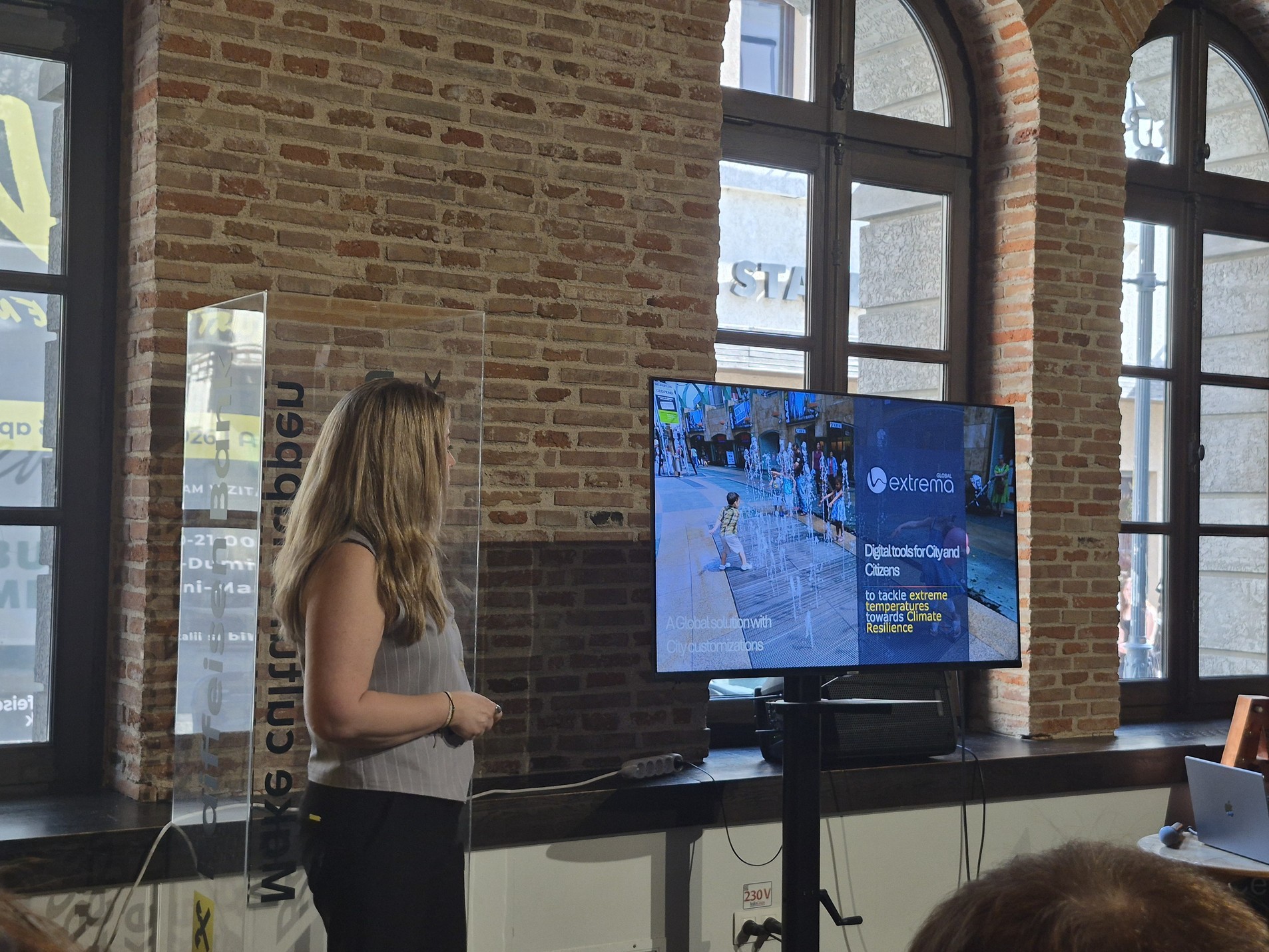
Iphigenia Keramitsoglou (National Observatory of Athens)
Letizia Cremonini and Teo Georgiadis (CNR, Italy) introduced “Ageing and Health in Warmer
Cities: a Challenge for Urban Regeneration in Bologna,” dividing the topic into two key vulnerability
dimensions. Teo Georgiadis detailed how extreme heat directly threatens the well-being and daily
independence of urban populations. Meanwhile, Letizia Cremonini demonstrated practical urban
design interventions – such as specialized shelters and cooling spots – to secure safe pedestrian access
to everyday locations like local markets for frail or mobility-impeded individuals.
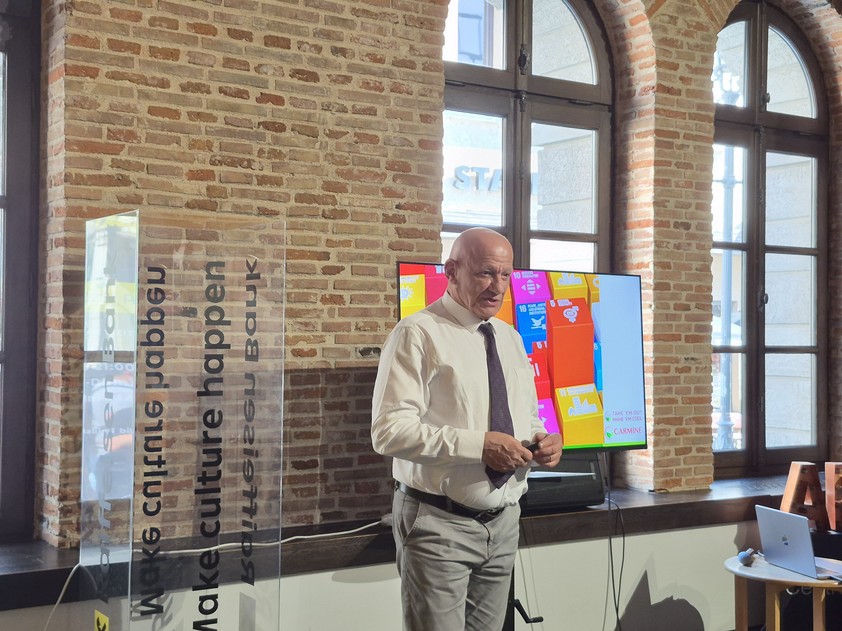
Teo Georgiadis (CNR, Italy)
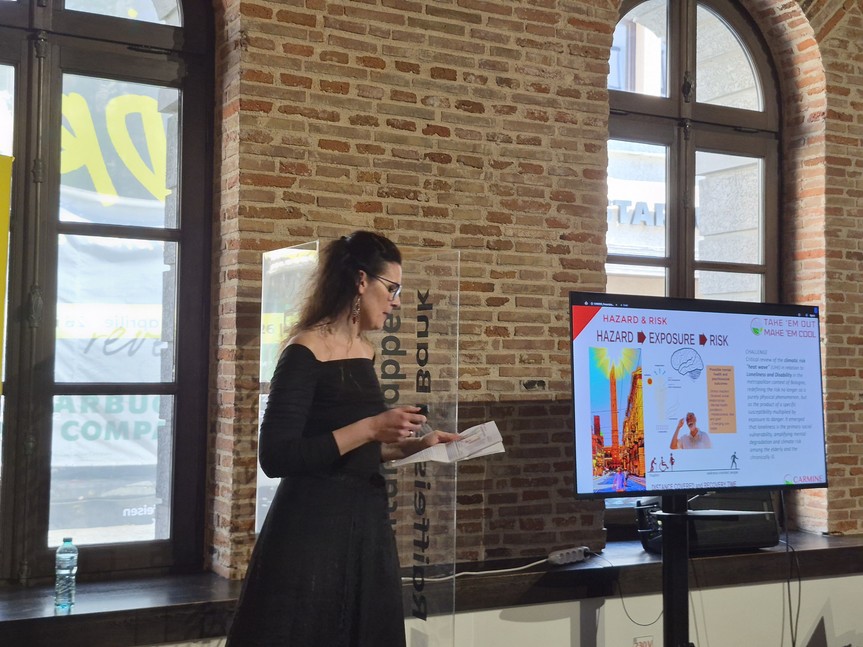
Letizia Cremonini (CNR, Italy)
The technical segments concluded with “Digital Twins and Living Labs: Bucharest and Brașov as
Urban Innovation Testbeds,” presented by Sorin Cheval, Ștefan Dincilă, and Ștefan Gabrian(ANM), alongside Mihai Răzvan Niță (University of Bucharest). Ștefan Dincilă and Ștefan
Gabrian demonstrated ANM’s high-spatial-resolution climate modelling and its seamless
integration into urban digital twins to simulate localised risks. Mihai Răzvan Niță then showcased
Brașov’s Living Lab, explaining how the local population actively participates in co-designing
practical local climate adaptation strategies.
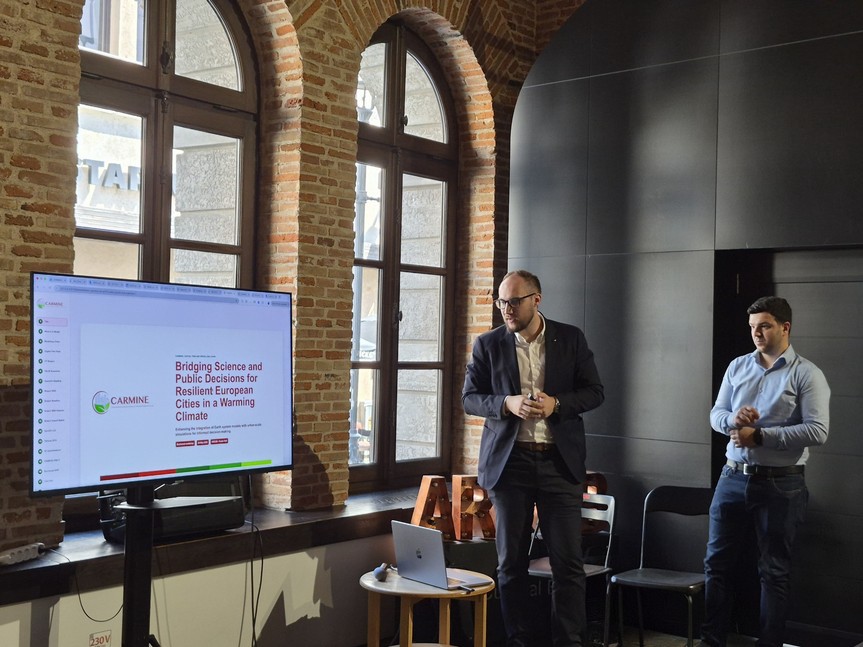
Stefan Dincilă and Ștefan Gabrian (ANM)
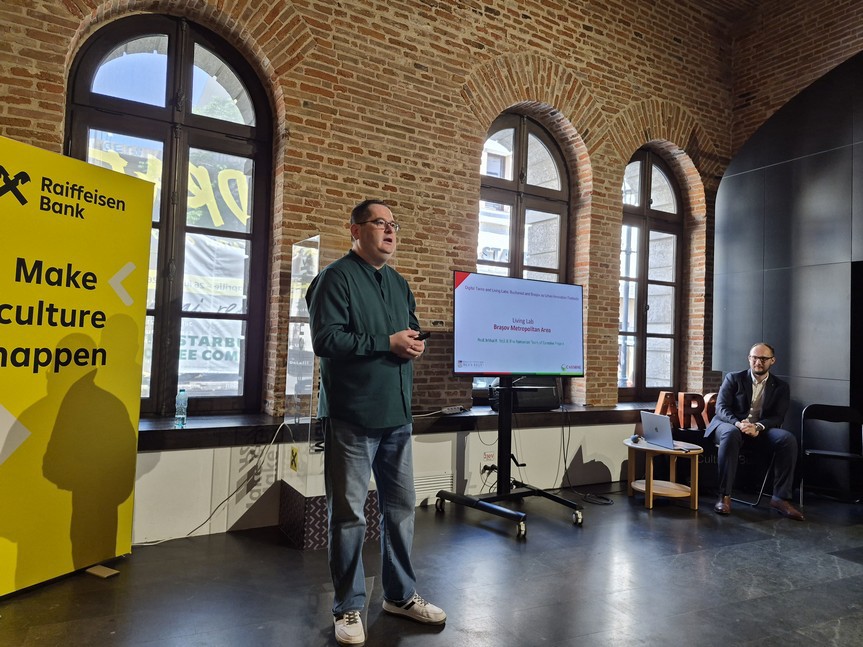
Mihai Răzvan Niță ( University of Bucharest)
The workshop concluded with a dedicated coffee break and interactive networking segment. This
concluding period provided a vital space for participants to engage in deeper dialogue,
brainstorm solutions to the presentation topics, and establish future collaboration among
municipalities, researchers and civil society to further operationalise climate adaptation tools in
everyday urban planning.