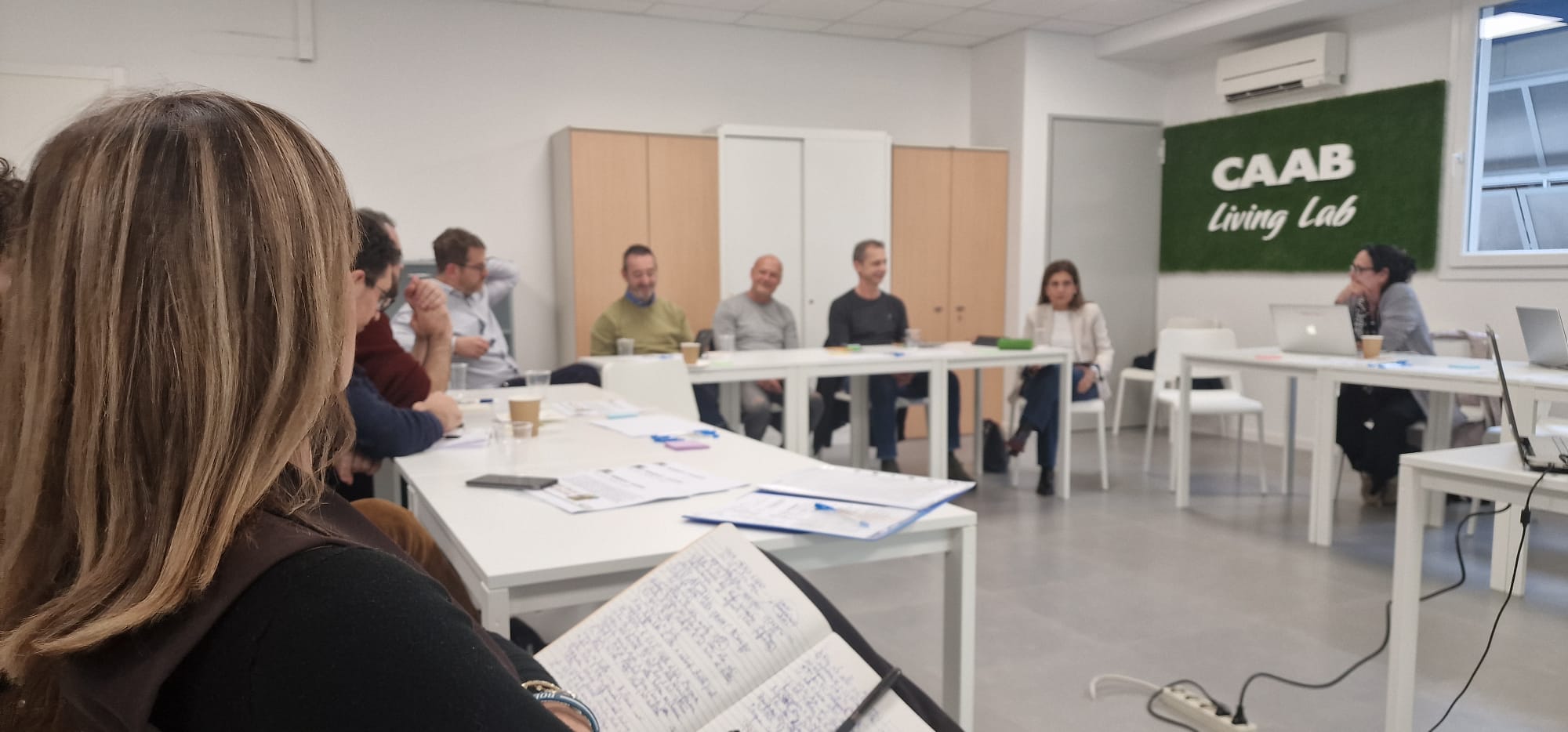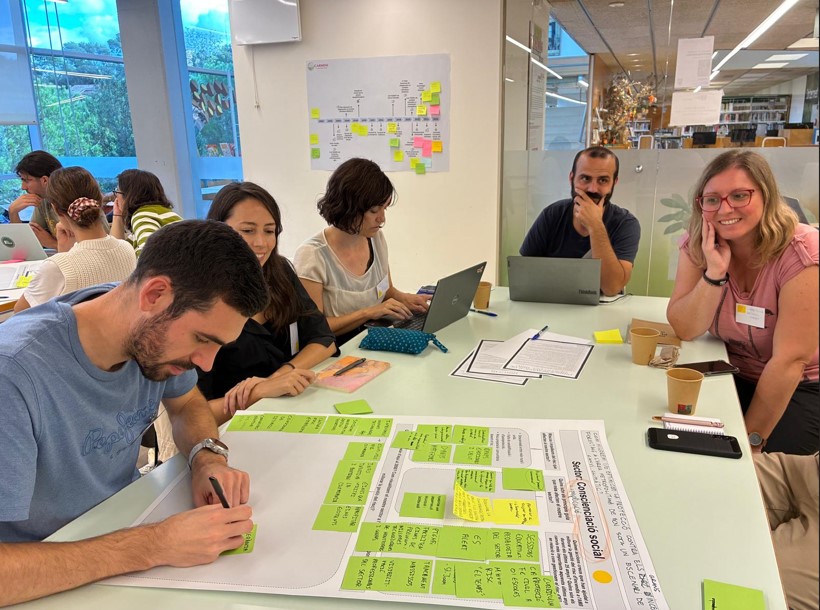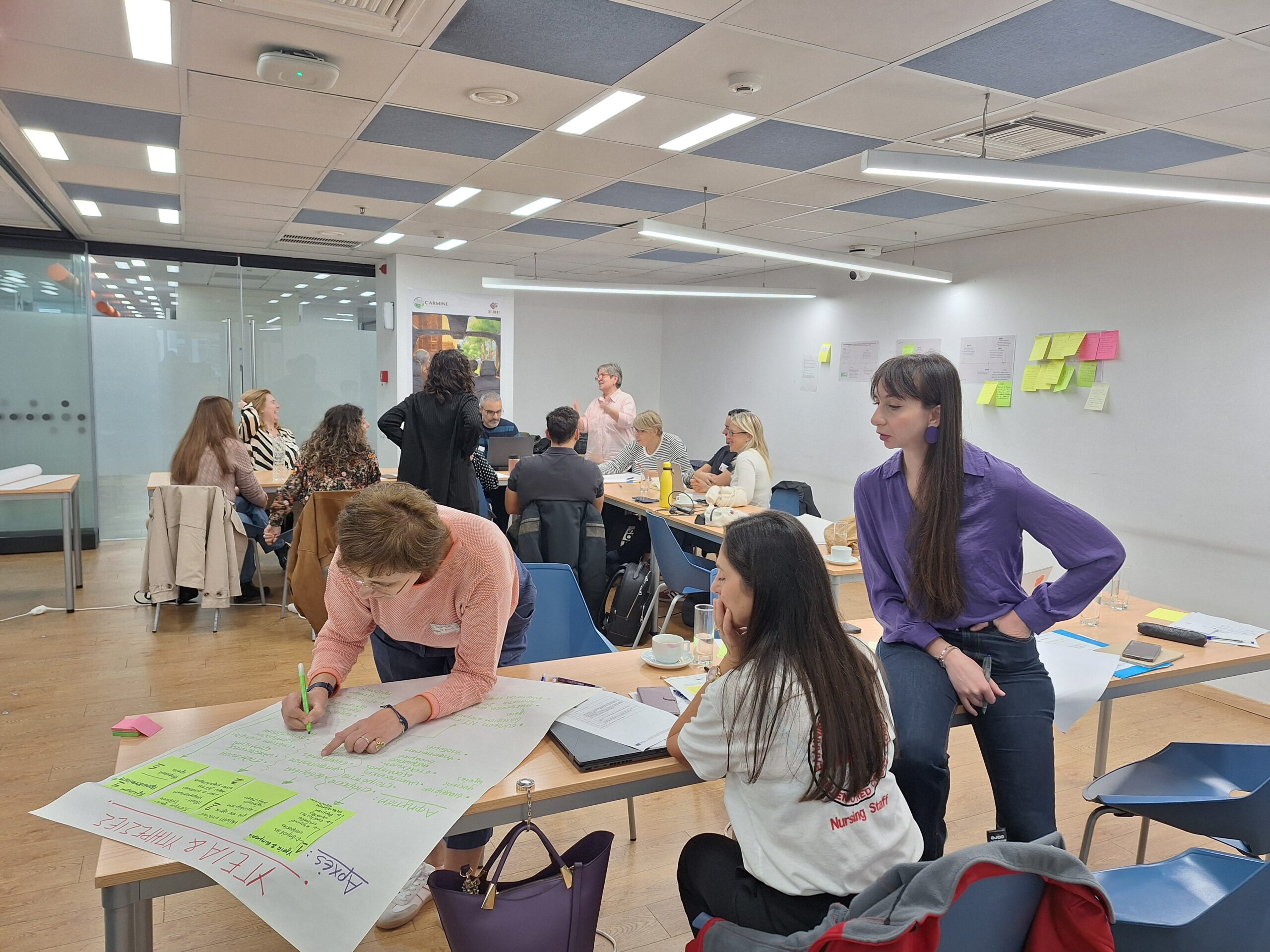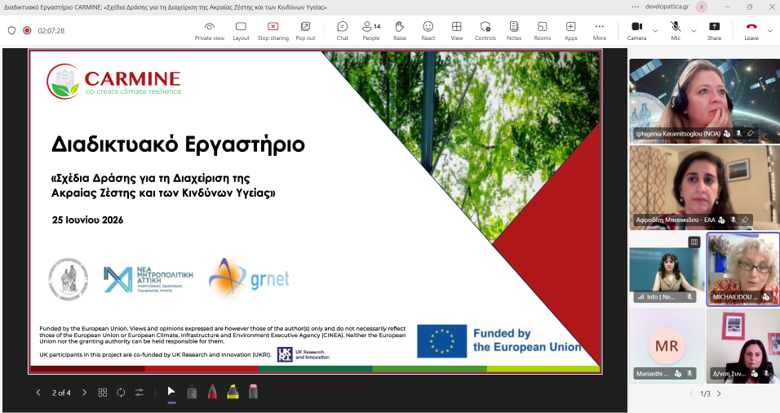
Through the CARMINE project, the Athens Case Study Area team is creating and sharing tools that municipalities in the Athens metropolitan area can use to better understand heat health risk and develop Heat-Health Action Plans. On June 25, the Athens Living Lab hosted an online session for municipalities interested in developing such plans. The session provided an overview of the DT-HEAT+ Digital Twin developed through CARMINE, the EXTREMA Global portfolio, and a Heat-Health Action Plan template developed for Athens municipalities.
Background and motivation: Last year, from July through December, the CARMINE Athens team distributed a survey to 40 municipalities in the Athens metropolitan area to gain a better understanding of heat health risk planning and the use of nature-based solutions for urban cooling across the area. Twenty-two individuals from 17 municipalities completed the questionnaire. The responses revealed an extensive interest in developing heat action plans and accessing health, vulnerability and heat risk data.
Athens area municipalities implement actions for heatwave preparedness and response. These include activating air-conditioned cooling centers, informing the public about self-protection measures, postponing or canceling outdoor events in extreme heat, telephone hotlines, and some reported conducting visits to heat-vulnerable individuals, setting up cool spots in parks, and distributing cooling kits to people experiencing homelessness. However, only half of the respondents (from 9 municipalities) reported that their municipality has a heat action plan, and only some of these are official plans. Most respondents (14 people from 11 municipalities) indicated that their municipality is interested in developing a heat action plan.
The survey also suggests that few local authorities have access to heat health risk data. Respondents from only four municipalities reported that their municipality has a heat vulnerability map or access to one, and more than half of the respondents declared that they do not have access to health impacts data.
Developing heat health action plans in collaboration with local partners and with access to heat-health risk data will allow municipalities to be better prepared and to mitigate risks for those most vulnerable and most exposed to extreme heat and its health impacts.
Practical tools for local authorities and partners
Responding to this need and interest, the Athens Living Lab held an online session for municipalities on June 25 focusing on heat health action planning, organized by Aphrodite Bouikidis of the National Observatory of Athens and Evi Tzimpoula of New Metropolitan Attica. Participants from 8 municipalities joined the session, many of whom were new to the Athens Living Lab activities. The online session featured a presentation of the DT-HEAT+ Digital Twin for heat on board the Destination Earth (DestinE) Platform and how it uses environmental data, meteorological data, demographic and socio-economic indicators and deep learning to provide same-day assessments of heat-related mortality risk. Dr. Iphigenia Keramitsoglou, who developed the digital twin, also showed how DT-HEAT+ provides a 5-year summer analysis with an indication of where today’s risk and temperature lie, and described the Heat Vulnerability Index and Socio-Economic Vulnerability Index that shows the vulnerability level of each municipality.
The session also included a demonstration of the EXTREMA Global portfolio, including a mobile app, and how it can provide city residents and visitors with information on cooling spaces, cool routes, drinking fountains and other cooling sites based on their location in participating cities, including the City of Athens. Participants also learned how city authorities can use the EXTREMA Global for seasonal preparedness and planning, and were invited to connect for a dedicated meeting if they wanted to onboard their municipality to the platform.
After reviewing the results of the survey, the Athens Living Lab team created a Heat Health Action Plan template to offer municipalities in the metro area a practical tool for developing an action plan. Aphrodite presented the template, that includes definitions of key terms, an overview of heat-health information, relevant findings from recent research on heat and health risk in Athens, and guiding questions and considerations to determine preparedness measures, warning and response measures during extreme heat, and after-action review and evaluation procedures. The template was developed based on relevant Action Plans from cities such as Vienna, Toronto (Canada), Tucson (U.S.), and others as examples. Municipality staff can use the template to gain a better understanding of what a Heat-Health action planning process might entail, and to begin planning the process of convening relevant municipal staff and partners to start developing a local action plan.
A director of the Hellenic Red Cross (HRC) also shared information about the HRC’s extensive heat-related emergency response services, as well as preparations, public awareness, and outreach that is important well in advance of the heat season.
Participants discussed practical solutions for preparedness and response during heat waves, the importance of interagency cooperation and involvement of community organizations and networks, and the need to utilize data and user feedback. At the same time, significant challenges were highlighted, such as limited access to data, privacy issues, and the difficulty of identifying and supporting people with high vulnerability and susceptibility to heat. The need for comprehensive action plans, better coordination among agencies, and increased public awareness and community involvement was emphasized in the discussion.
Continued Collaboration for Heat-Health Resilience in Athens
The participants from municipalities expressed interest in utilizing the tools and collaborating on future initiatives. Through CARMINE, the Athens Living Lab partners will continue developing these tools, engaging with municipalities, and supporting collaboration across sectors and disciplines through the Athens Living Lab.
The third workshop of the Athens Living Lab will take place in October 2026.
Learn more about the Athens Living Lab and other Living Labs in CARMINE by visiting the Stakeholders Community Hub: https://schub.carmine-project.eu
The National Observatory of Athens (NOA) is a leading Greek Research Centre focused on advancing Space Sciences and their practical applications, with a proven track record of impactful contributions. NOA is participating in CARMINE work with two Institutes: the Institute for Astronomy, Astrophysics, Space Applications & Remote Sensing (IAASARS) and the Institute for Environmental Research and Sustainable Development (IERSD).
The Hellenic Ministry of Digital Governance (MoDG) operates as a public administration unit and brings together all critical IT and telecommunications structures involved in the provision of electronic services to citizens and the broader digital transformation of the country. MoDG supports CARMINE as an Associate Partner.
The National Infrastructures for Research and Technology (GRNET – EDYTE S.A.) is one of Greece’s largest public tech agencies under the Hellenic Ministry of Digital Governance. Since 1998, it has been driving digital transformation through data centers, high-performance computing, secure networks and cutting-edge innovation in AI and digital skills.
“New Metropolitan Attica S.A.” (NMA) as a Regional Development Organization of Attica operates with the purpose of contributing to the planning and actualisation of development initiatives and projects which support the wider developmental targets and priorities of the Region of Attica. Major reference points for the Organization are the enhancement of social cohesion and the improvement of the quality of life both in and beyond Attica.
The Academy of Athens and the Athena Research Center (ATHENA RC) are also partners in the CARMINE project, playing key roles in developing the digital twins and guiding the Living Labs.