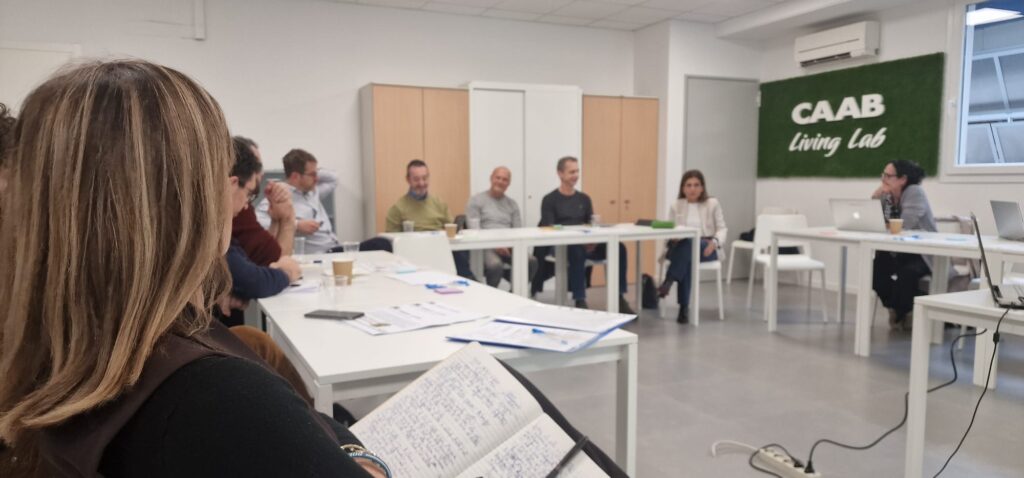
In Bologna, this work takes shape through Bologna’s case study area (CSA), which tests and combines various tools and methods. Central among these is the Living Lab—an open, real-world laboratory where businesses, public institutions, and citizens experiment with solutions for a more equitable, sustainable, and supportive city. The CSA targets older adults, including those with physical disabilities or chronic conditions such as Alzheimer’s, Parkinson’s, and cognitive decline. Supporting their participation in city life through social engagement can help slow cognitive deterioration. For this reason, the case study places particular emphasis on an essential daily activity: shopping, and therefore on markets.
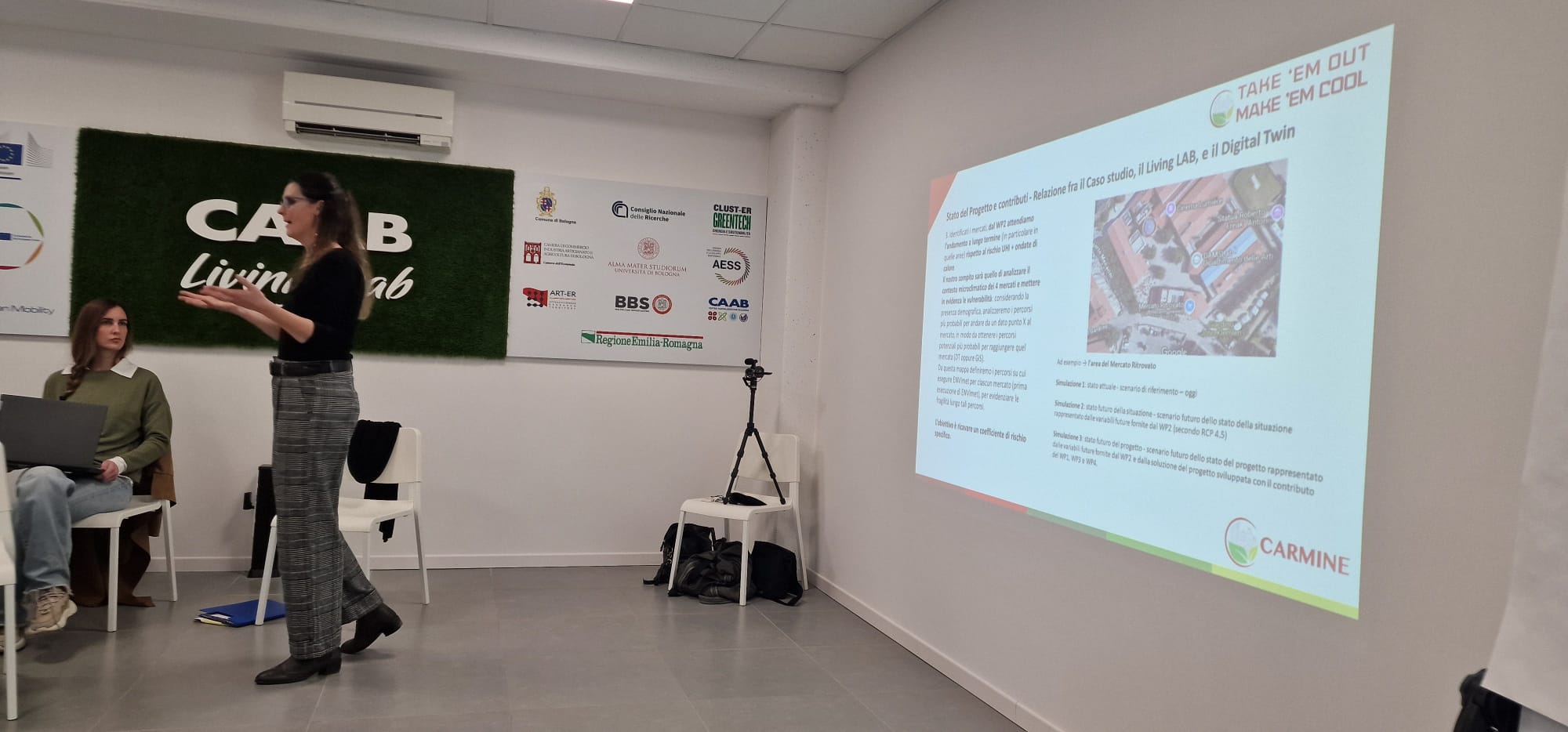
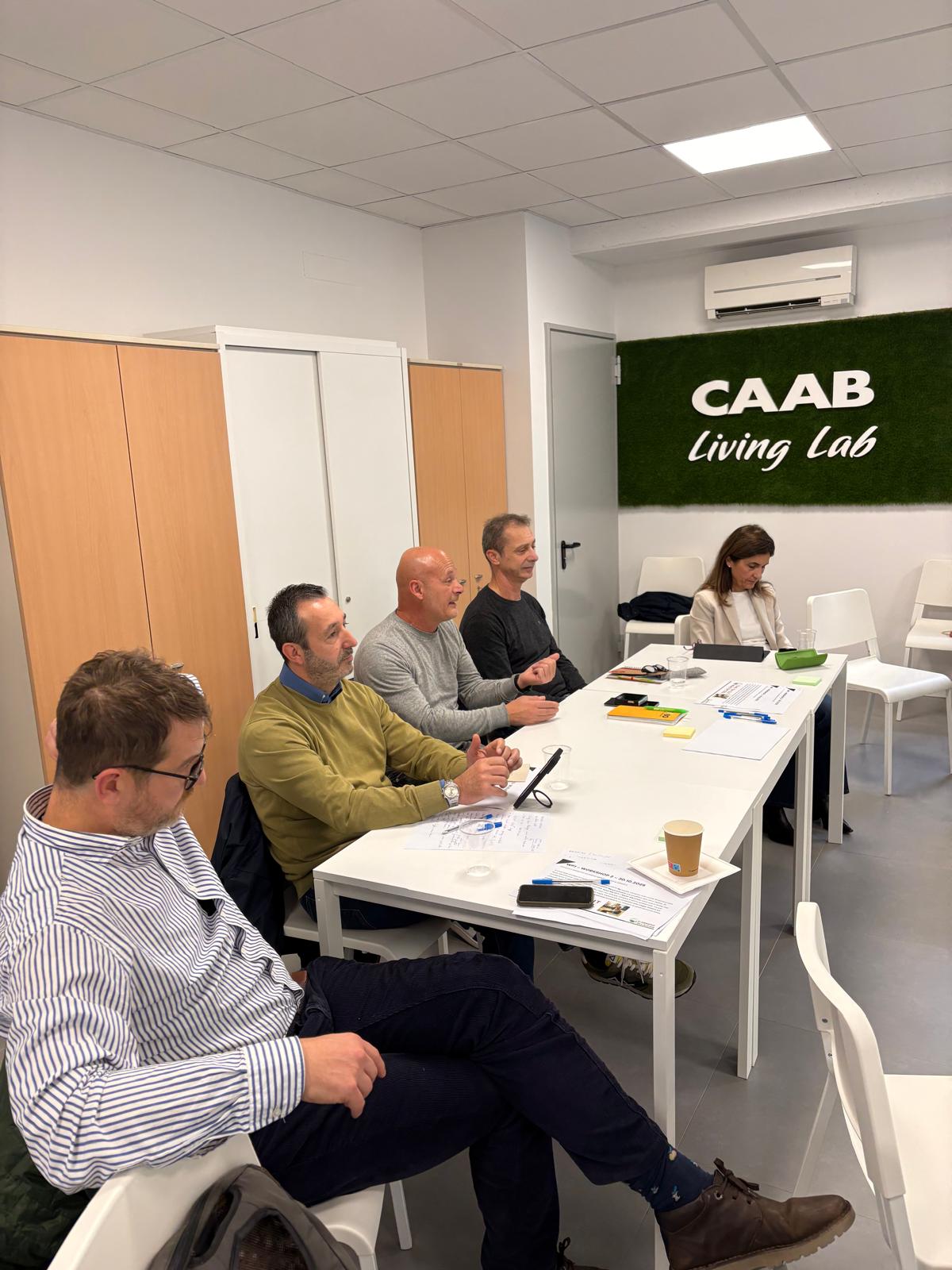
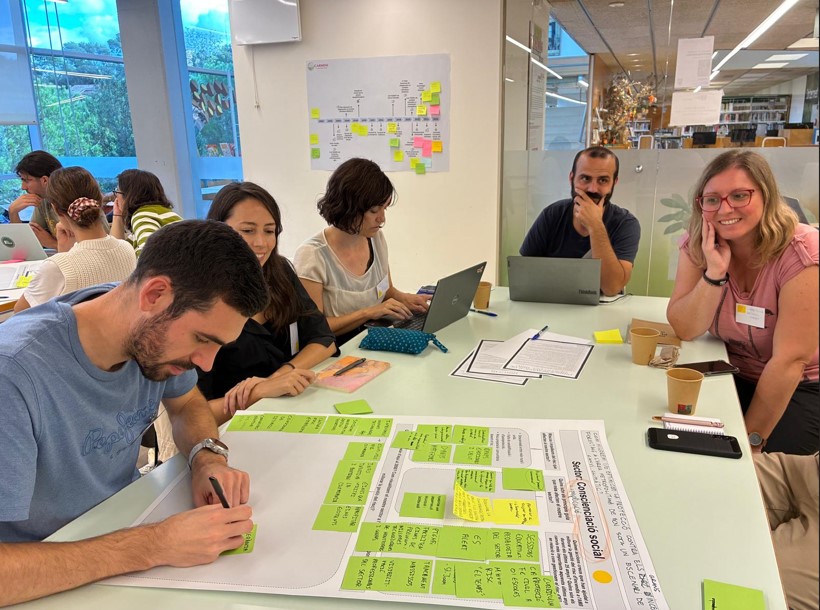
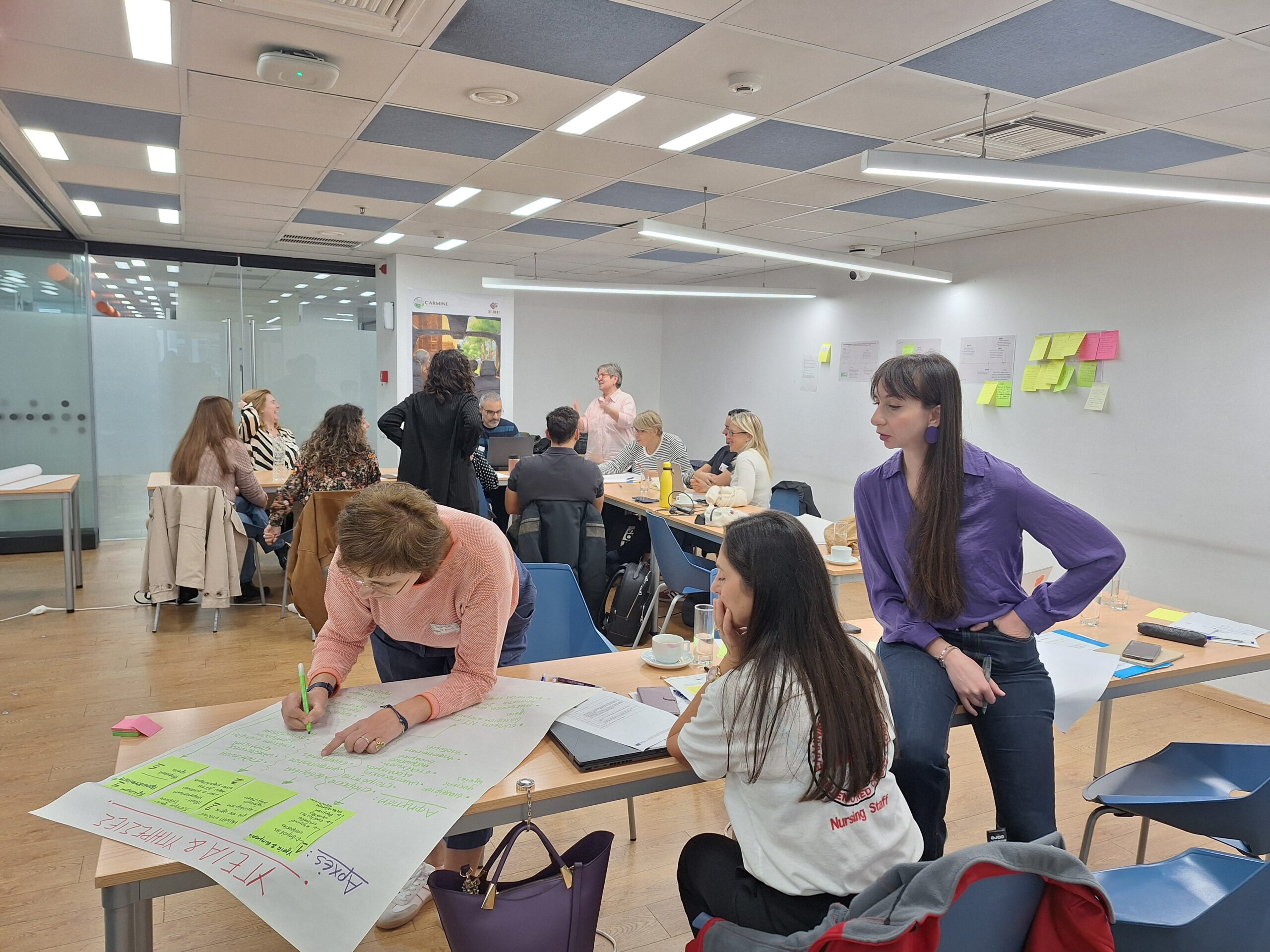
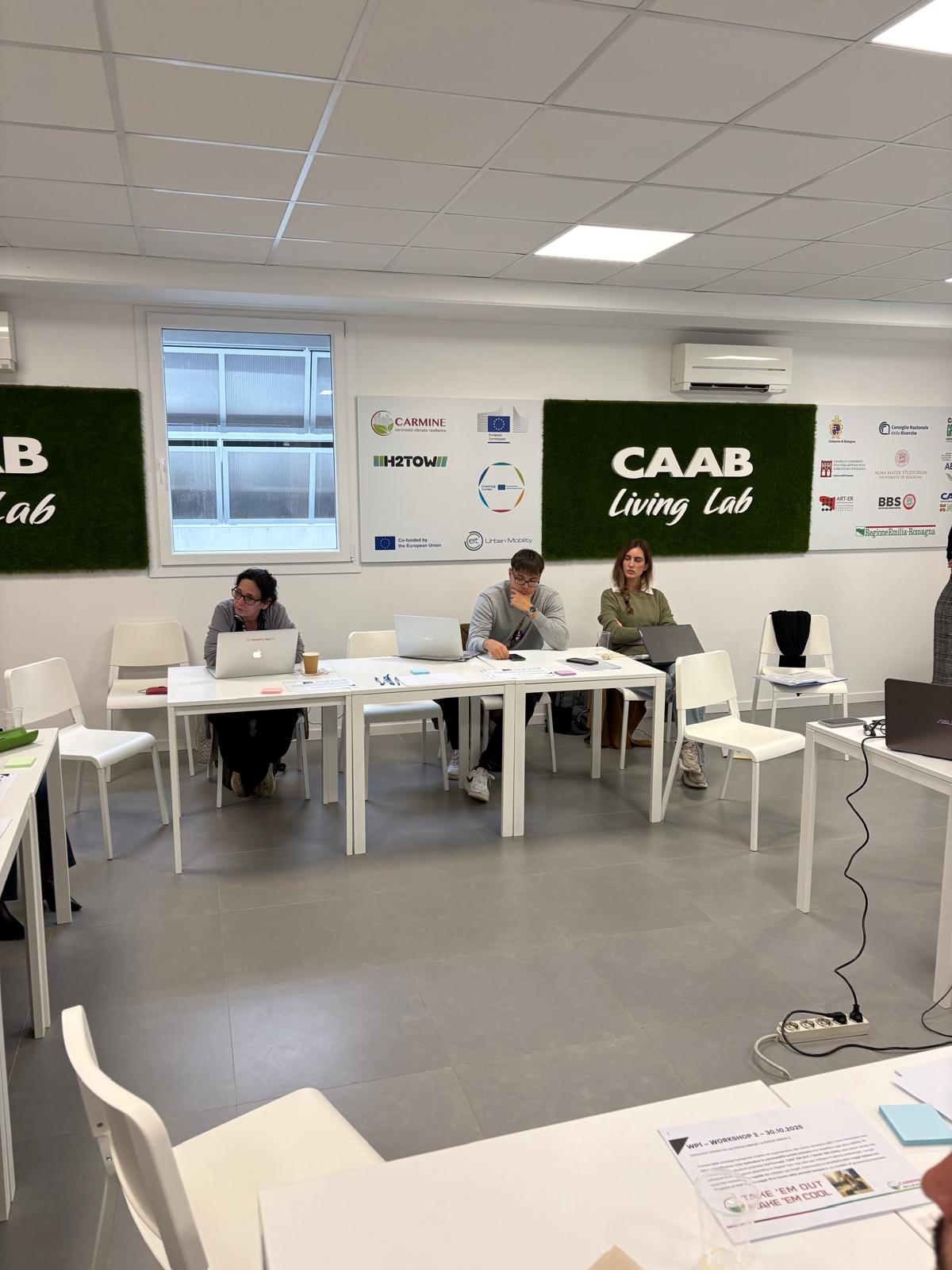
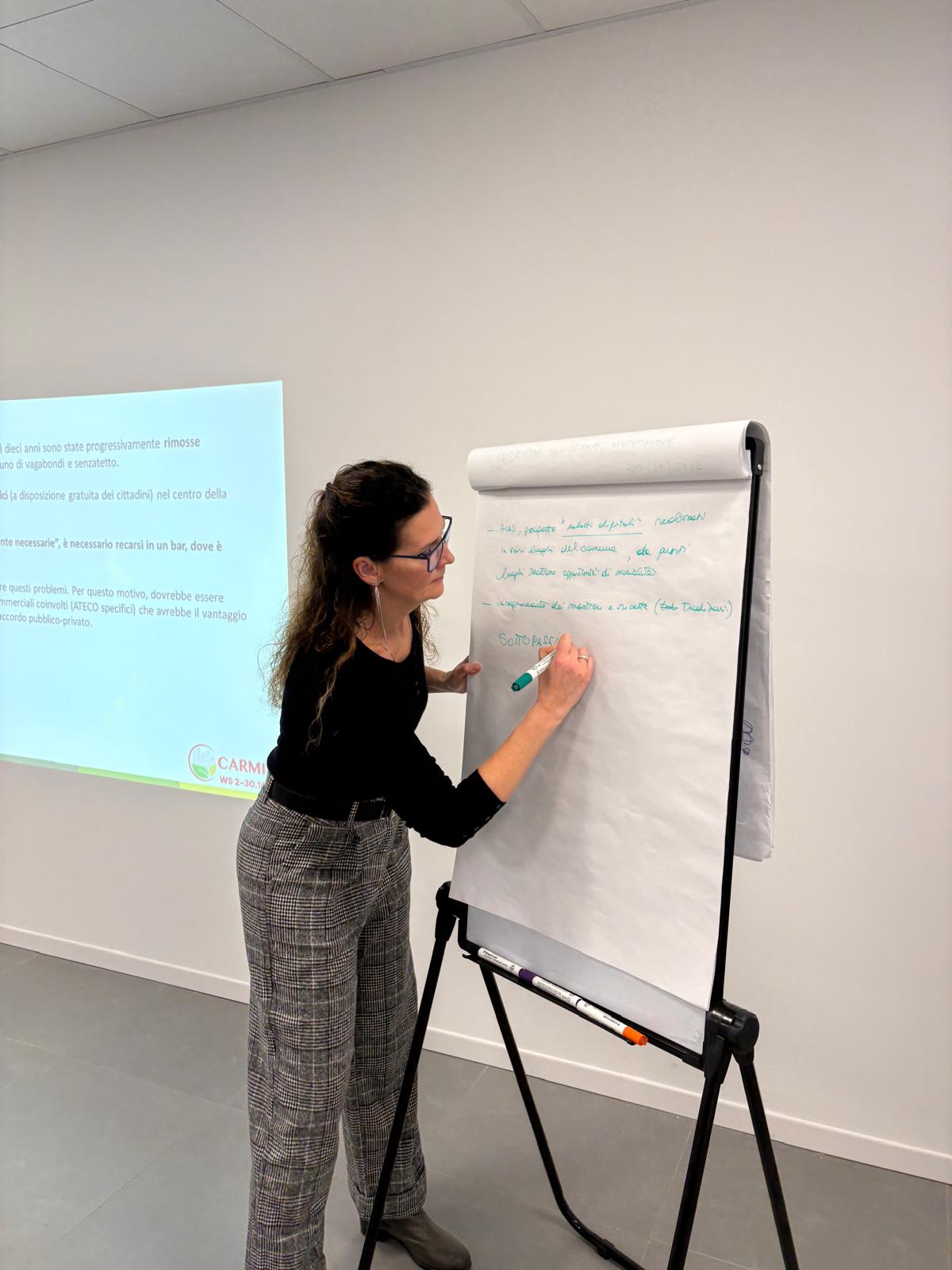
Within this framework, CARMINE’s Second Living Lab Workshop was held in CAAB’s Permanent Living Lab space on October 30, 2025. The meeting provided an opportunity to reconfirm and validate the project’s two central challenges:
1. Rethinking Climate Risk: Heat Waves (UHI), Loneliness, and Disability
Participants critically reviewed the climate risk associated with heat waves and urban heat islands (UHI) in relation to loneliness and disability in Bologna. The discussion redefined risk not as a purely physical phenomenon but as the result of specific vulnerabilities combined with exposure to danger. It emerged clearly that loneliness is the leading social vulnerability, amplifying both mental decline and climate risk among older people and individuals with chronic diseases.
2. Urban Pollution Islands (UPI) and Unequal Access to Healthy Food
Alongside the UHI phenomenon, the workshop highlighted the need to consider urban pollution islands (UPI), which are closely linked to local microclimates shaped by air recirculation processes. Moreover, several urban areas – often home to socially disadvantaged residents – have limited access to fresh and healthy food. These food deserts face higher risks of obesity, diabetes and cardiovascular disease due to restricted availability or higher costs of quality products.
Strategic Objectives
From these two challenges arise two main strategic objectives:
1. Supporting Potentially At-Risk Groups
This objective focuses on proactive intervention for people in the “grey area” of the risk spectrum. The operational strategy follows the Take ’em Out / Keep ’em Cool concept—encouraging people to leave their homes and ensuring their physical and mental well-being. The aim is to use familiar, accessible community spaces (e.g., markets, libraries) as social climate shelters.
2. Reducing Urban Pollution Islands Through Electric Deliveries
This objective seeks to demonstrate the value of using electric vehicles for commercial deliveries. Electrification helps reduce urban pollution islands (UPIs) and supports more sustainable urban logistics. Since mobility-vulnerable individuals have specific needs, adaptation measures include ensuring deliveries are made under safe weather conditions, using electric vehicles and promoting a fair distribution of affordable, high-quality goods.
The Seven CSA Policy Sub-Objectives
These two overarching objectives have been translated into seven key sub-objectives of the Bologna CSA’s policy. They will be explored in detail in upcoming project updates:
1. Policy and Legislative Objective
2. Integrated Diagnosis and Modeling Objective
3. Inclusive Resilience Objective
4. Social Adaptation Objective
5. Mitigation and Public Health Objective
6. Adaptive Capacity Objective
7. Urban Quality and Sustainability Objective
Participants
The workshop brought together representatives from institutions, foundations, cooperatives and businesses, including:
AIAS, Cotabo Taxi Cooperative, Fondazione Innovazione Urbana, GreenTech Cluster Emilia-Romagna, Local Health Authority, Emilia-Romagna Region – Sustainable Energy Department, Accademia dei Georgofili, Accademia dell’Agricoltura, Marcella Marzari (Communications Sector and Fondazione Aldini Valeriani), Antonio Ruberto (Mobility Consultant), Legambiente, and Mercato Ritrovato.