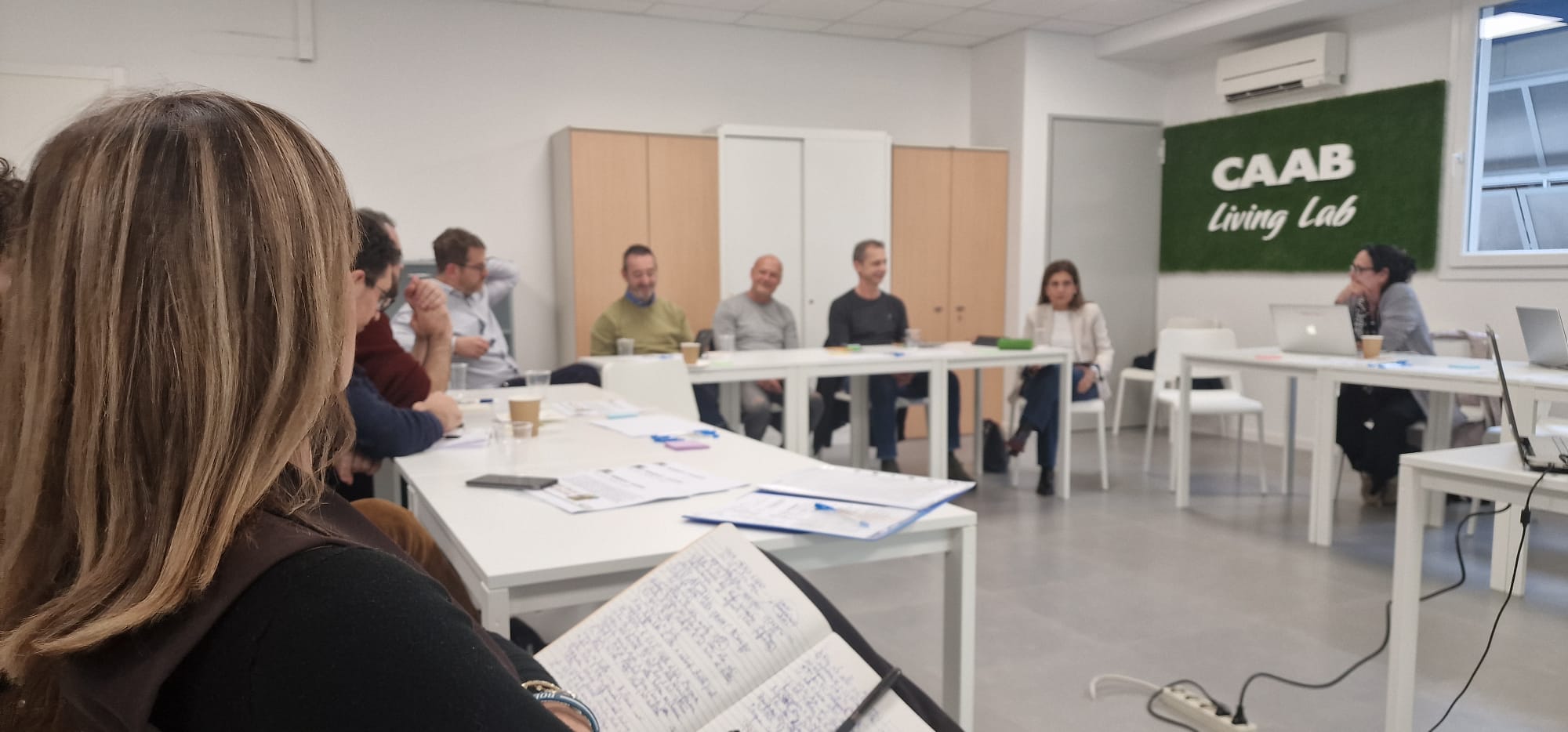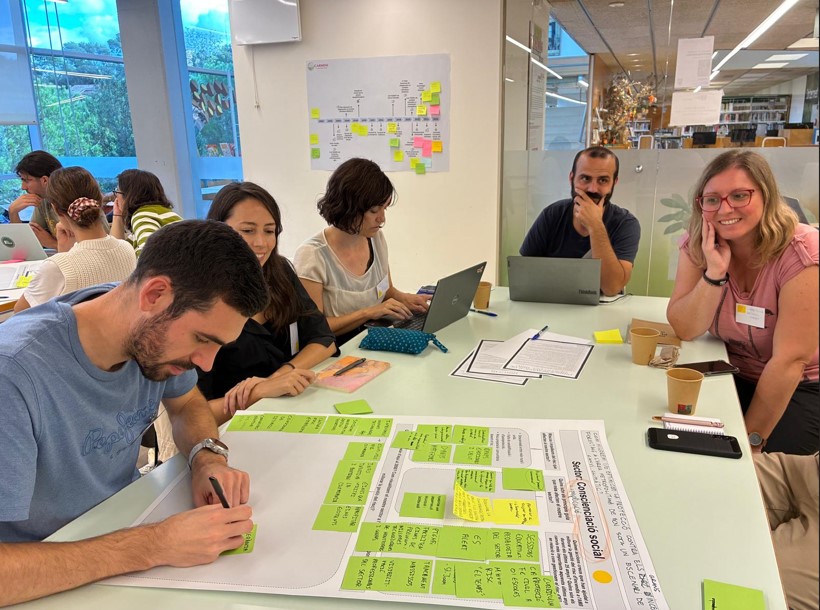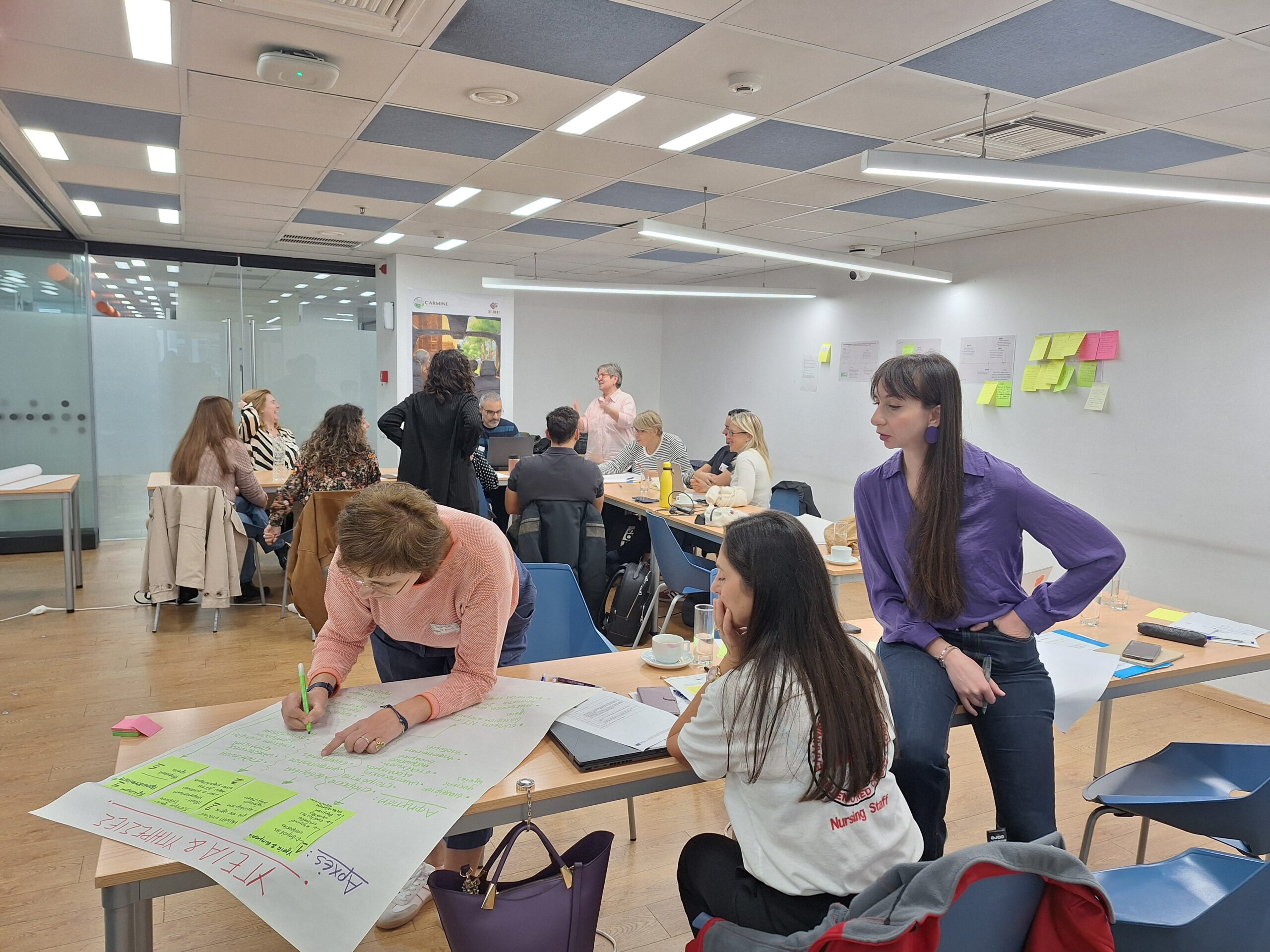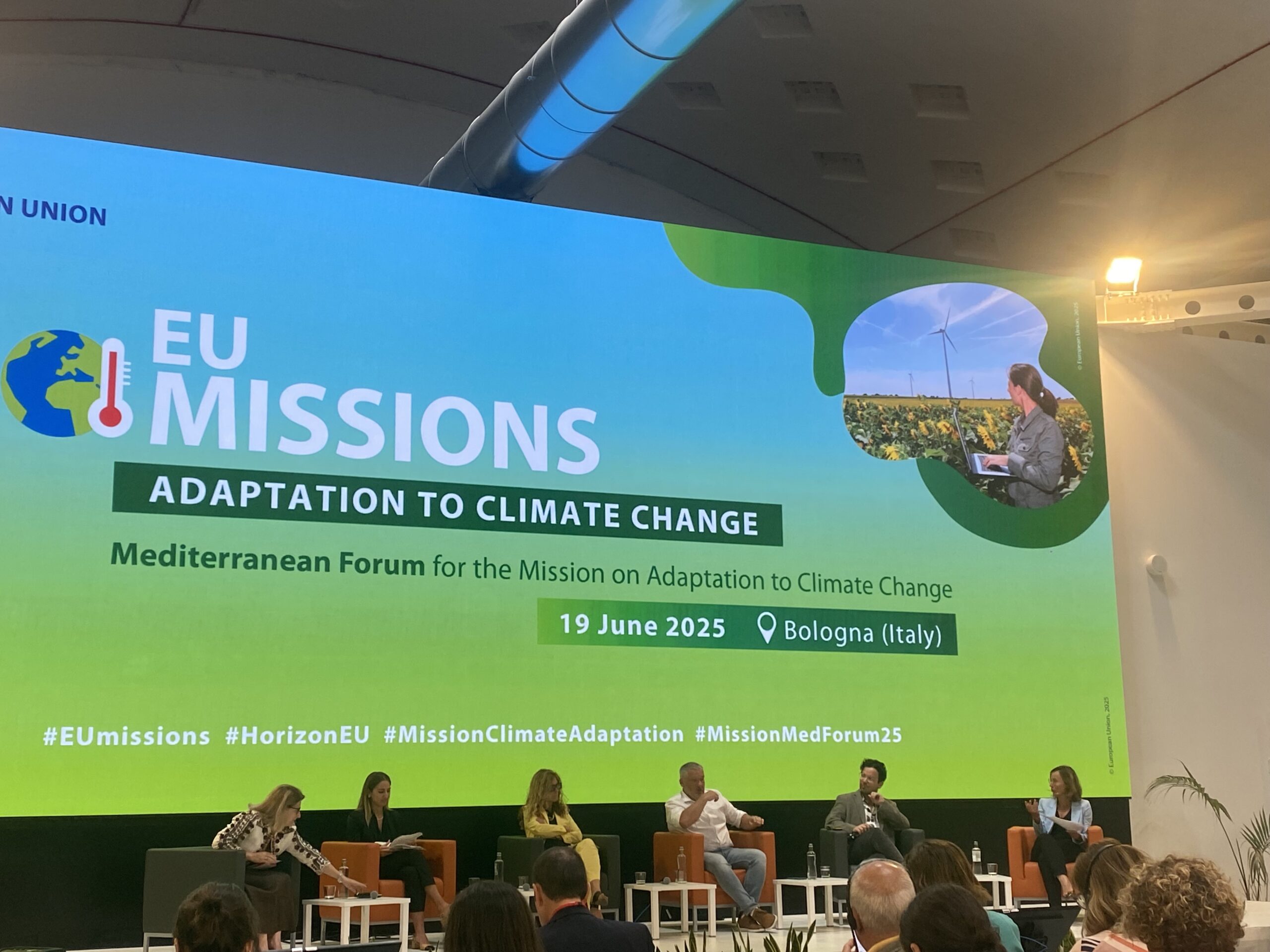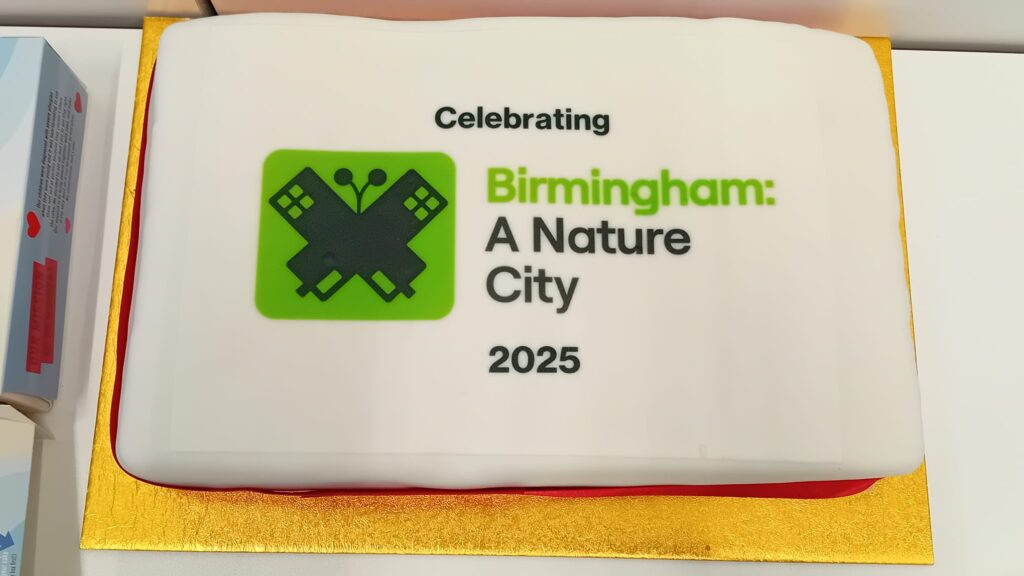
On 16 September 2025, the CARMINE Project brought stakeholders together, both to celebrate this success and to hold the second Birmingham Living Lab workshop. The first Living Lab meeting had considered the risks, drivers, barriers and solutions involved in preparing Birmingham to adapt to future climate hazards—specifically surface water flooding and extreme heat. The urban forest was identified as playing a key role in supporting adaptation solutions to both challenges. In addition, discussions focused on how these risks are felt most acutely by vulnerable communities.
For the second Birmingham Living Lab workshop, a lineup of speakers who had been instrumental in winning the Nature City award shared details of the city’s progress to date and a forward-looking perspective towards Birmingham in 2050, introducing two key visioning documents: the OurFuture Nature City Plan and the Birmingham Urban Forest Master Plan. Inspired and enthused by the speakers, participants dove into discussions related to the problem statement: “How can we better map and manage urban greenery to provide more shade where it is most needed?”
Undergraduate student Holly wrote a short article about the event from the point of view of a young person living in Birmingham; more details of the workshop outputs are available on the Birmingham CARMINE Living Lab Stakeholder Hub. These outputs will inform the third CARMINE Living Lab workshop – planned for early 2026 – which will look at climate adaptation and mitigation pathways as well as research and innovation roadmaps. To find out more, contact: dxb354@student.bham.ac.uk.
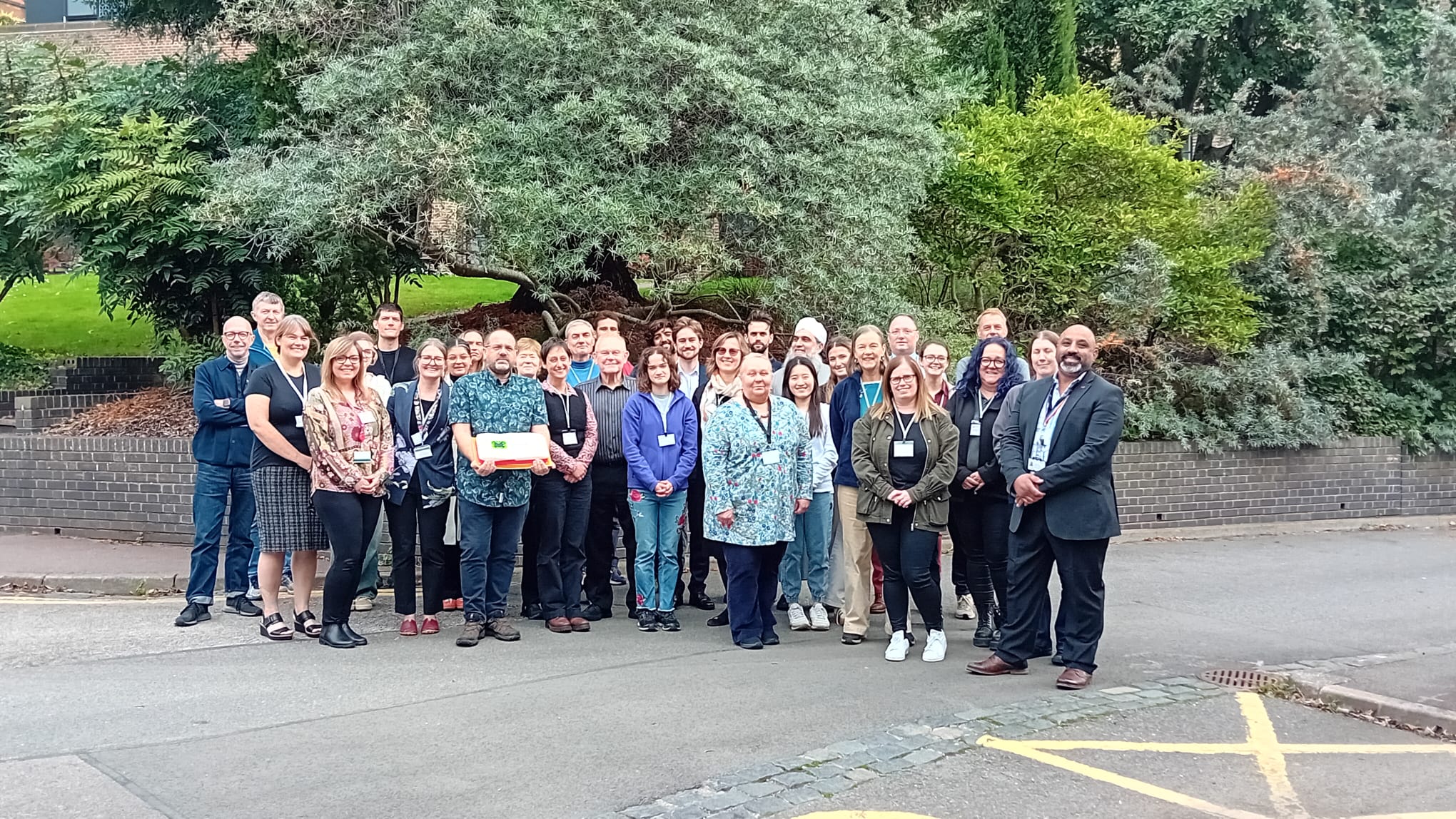
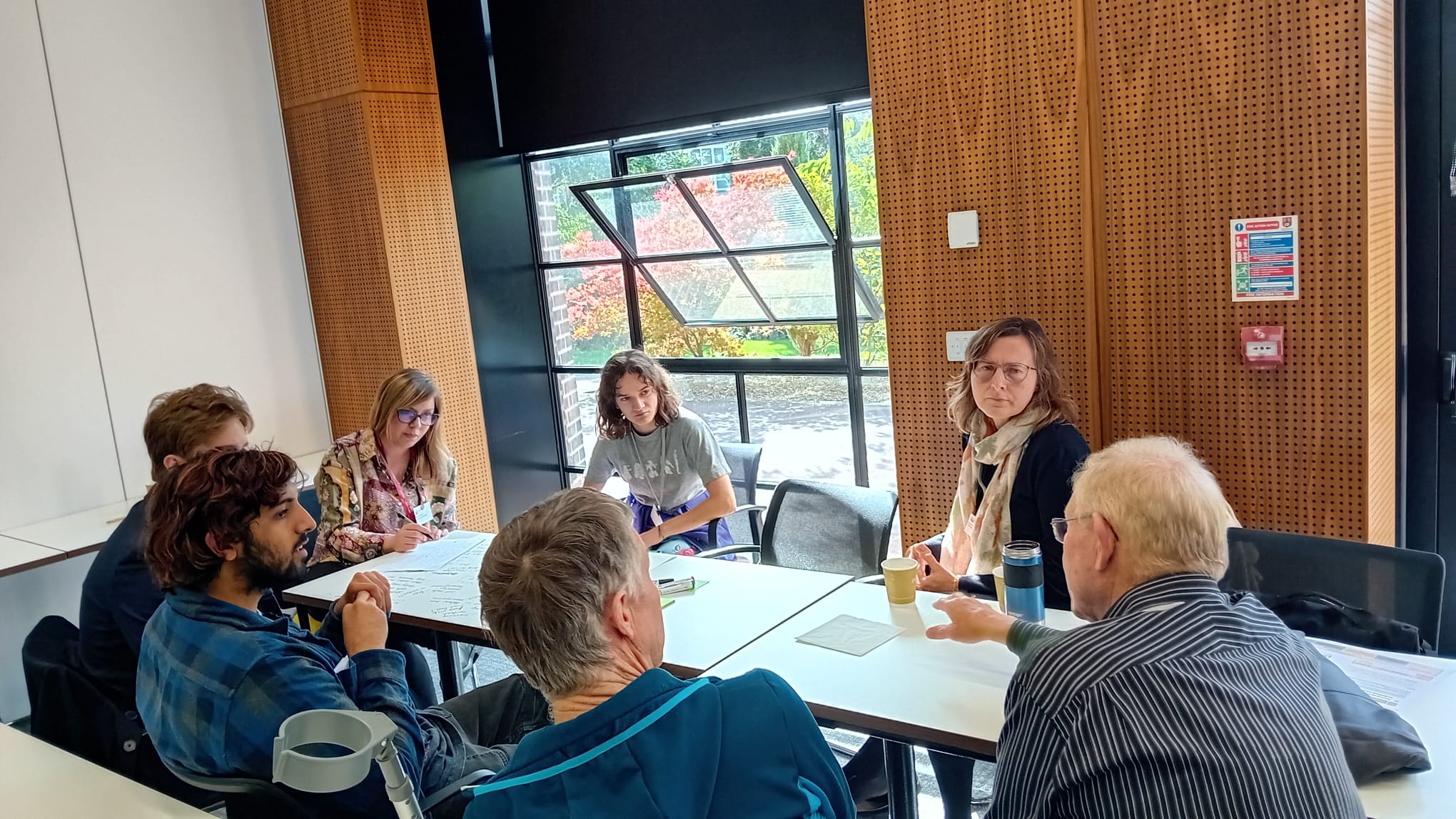
Participants of the Birmingham CARMINE Living Lab.